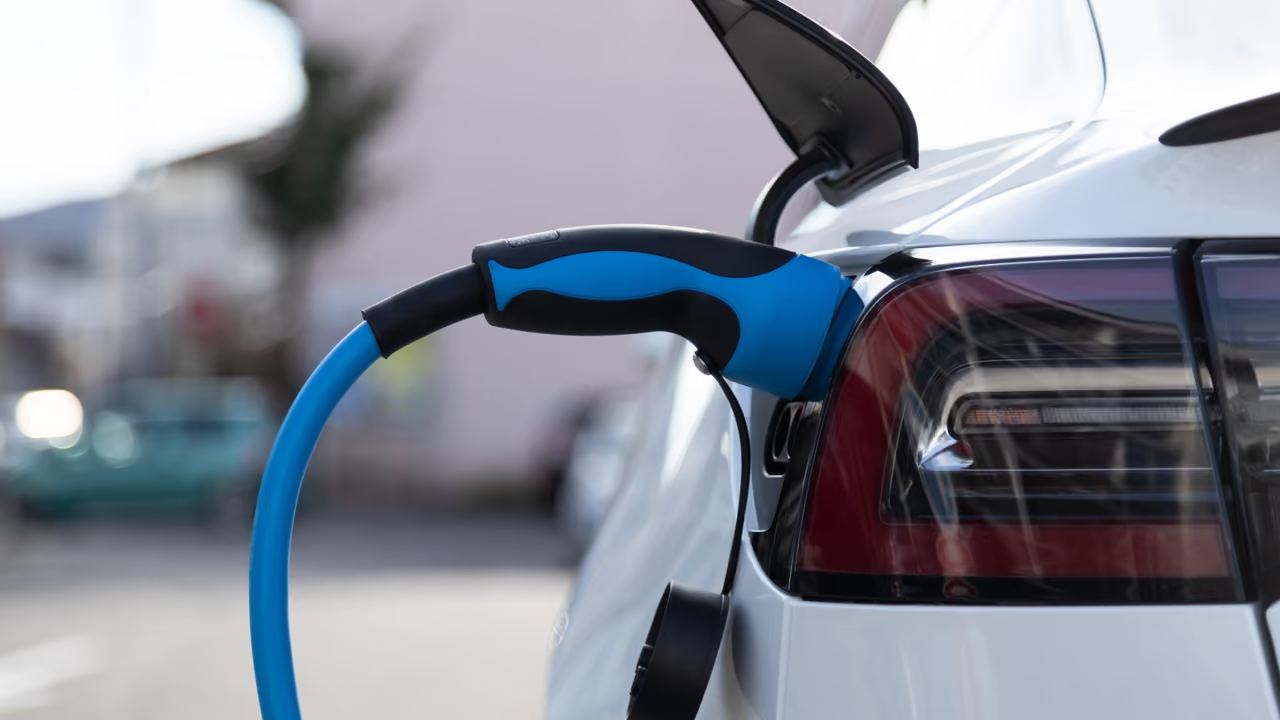
How green is your EV charging routine? As electric vehicles become more common, the environmental impact of charging them often gets overlooked. Not all charging methods are created equal when it comes to sustainability. Understanding the carbon footprint behind different charging options can help EV owners make choices that truly reduce their environmental impact.
Comparing carbon footprints home charging and public fast charging
Charging an EV at home typically involves plugging into your residential electricity supply. This is often done overnight on a standard Level 2 charger, which is relatively slow but convenient. The carbon footprint of this method depends heavily on the electricity mix powering your home. If your grid relies on coal or natural gas, your EV’s charge isn’t as green as you might think.
Public fast chargers, on the other hand, are designed to replenish your battery in a fraction of the time. These DC fast chargers deliver power at rates up to 350 kW. While this speed is great for convenience, it can come with a bigger environmental cost. Fast charging demands a lot of energy in a short burst, often sourced from the grid’s peak load generation, which can be dirtier. Additionally, fast chargers sometimes rely on diesel backup generators in remote areas, increasing emissions.
Studies suggest that home charging generally results in a lower carbon footprint compared to public fast charging — assuming your home electricity is reasonably clean. For instance, an EV charged overnight in California, where renewables make up a significant portion of the grid, produces far fewer emissions than one fast-charged in a region dependent on fossil fuels.
Renewable energy integration in EV charging stations
The sustainability of EV charging improves dramatically when renewable energy sources are integrated. Solar-powered charging stations are popping up in parking lots, shopping centers, and workplaces. These stations typically combine solar panels with Level 2 or fast chargers, offering emissions-free energy during daylight hours.
Wind energy is another player in the renewable charging game. Some public charging networks source electricity from wind farms, either directly or through renewable energy certificates (RECs). This means that even if the power fed into the station comes from the grid, it is offset by an equivalent amount of clean energy elsewhere.
However, the availability of renewables at charging stations varies widely by location and operator. Consumers should look for chargers explicitly powered by green energy or those certified by credible renewable programs to ensure their charging is as clean as possible.
The role of energy storage in reducing charging emissions
Energy storage systems are becoming a crucial component in sustainable EV charging infrastructure. By pairing batteries with solar panels or wind turbines, charging stations can store clean energy generated during off-peak hours or sunny periods. This stored energy can then be used to charge EVs even when the sun isn’t shining or the wind isn’t blowing, reducing reliance on the grid.
Energy storage also helps manage demand spikes caused by fast charging. Instead of pulling large amounts of electricity from the grid at once, a station with battery storage can smooth out the load, reducing the need for fossil-fuel-powered peaker plants to ramp up. This not only cuts emissions but can lower operational costs, making green charging more economically viable.
Tips for consumers to minimize the environmental impact of EV charging
- Charge at home during off-peak hours — Overnight charging often aligns with lower grid demand and, in some regions, cleaner energy availability. Use your utility’s time-of-use rates to save money and emissions.
- Use public chargers powered by renewables — Seek out charging stations that advertise solar or wind energy usage or participate in verified green energy programs.
- Avoid frequent fast charging — Reserve DC fast chargers for long trips or emergency top-ups. Regular use of slow or Level 2 charging reduces strain on the grid and emissions.
- Consider installing solar panels at home — Generating your own clean electricity to charge your EV cuts out fossil fuels entirely. Coupling solar with a home battery system boosts flexibility.
- Stay informed about your local grid mix — Understanding when and where your electricity comes from helps you time your charging to coincide with cleaner energy availability.
Electric vehicles offer a clear path away from tailpipe emissions, but the upstream environmental cost of charging remains a factor. By choosing the right charging methods and supporting renewable-powered infrastructure, consumers can ensure their EVs deliver on their green promise.