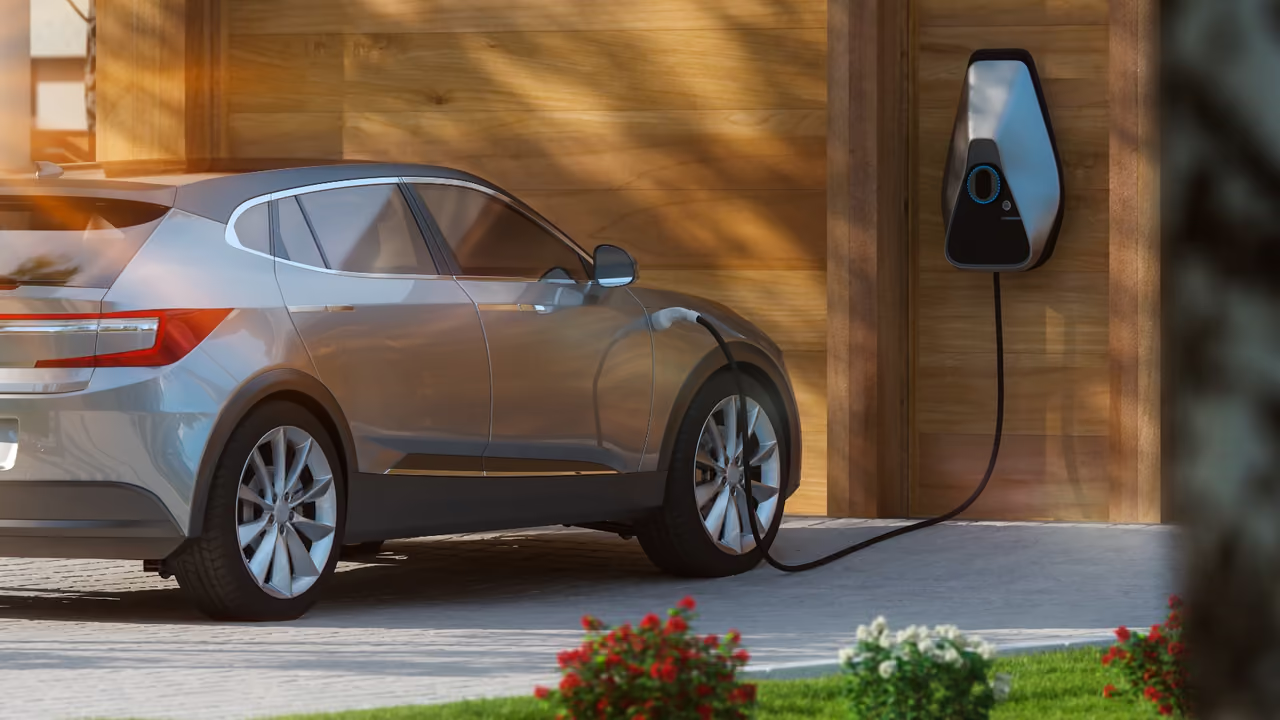
Can electric cars truly reshape the way rural communities live and move, or are they just an urban trend with limited reach beyond city limits?
Challenges of Electric Cars in Rural Infrastructure
Electric vehicles (EVs) are often called the future of transportation, but rural areas face real challenges. Unlike cities with many charging stations close together, rural regions usually have few or no EV chargers. This lack makes drivers worry about running out of battery with nowhere to recharge. The distances between towns and homes in the countryside are longer, so vehicles need bigger batteries and longer range. That often means higher costs.
On top of that, rural power grids may not handle the extra load from several EV chargers. Many rural electrical systems are old and weaker, so upgrades are needed but expensive. Without big investments to modernize the grid and add chargers, rural EV use will stay slow.
For example, a farmer living miles from the nearest town might have to drive 50 miles or more just to reach a charging station. That’s a trip many EVs with smaller batteries can’t manage easily. Plus, installing a home charger might require costly electrical work if the local grid can’t support it.
Economic Impacts on Rural Residents
Owning an electric car in the countryside can be a mixed bag financially. On one side, EVs cost less to run—no gas to buy, fewer repairs, and sometimes tax breaks. This could help rural families who often watch every dollar.
But the upfront price of EVs, especially those with long-range batteries, is still high. Rural incomes tend to be lower than in cities, making the initial cost a big hurdle. Also, the used EV market is smaller in rural areas, so finding affordable secondhand options is tough.
Another issue is internet and cell service, which can be spotty in many rural spots. Many EVs rely on apps for charging and diagnostics, so poor connectivity adds hidden costs or hassles that city drivers rarely face.
Take a small town where internet speeds are slow or unreliable. An EV owner might struggle to find available chargers through apps or keep the car’s software updated. These problems add friction to owning an electric car outside the city.
Environmental Benefits Tailored to Rural Settings
Electric cars bring clear environmental benefits, and these play out differently in rural areas. Many rural places suffer from poor air quality caused by old diesel trucks and farming machines. Switching to electric cars can cut local pollution, lowering harmful nitrogen oxides and tiny particles that harm health.
Rural communities often have better access to renewable energy like wind, solar, and small hydro power. That means charging EVs locally can produce fewer carbon emissions than in cities, where electricity still often comes from coal or gas plants.
Plus, rural drivers usually cover longer distances. Over time, switching to electric vehicles can cut a lot of greenhouse gases. This is especially true if communities invest in local green energy projects, like solar farms or wind turbines, to power their cars cleanly.
For instance, a rural town with a community solar array could charge EVs with nearly zero emissions. That’s a big win for both local air quality and the global climate.
Future Opportunities for Rural Electric Mobility
Despite current problems, rural areas could become hubs for new electric mobility ideas. One promising path is community charging hubs. Neighbors can pool money to build and run charging stations together. This spreads costs and builds a sense of teamwork around clean transport.
Electric pickup trucks and utility vehicles designed for rural work are also growing in popularity. These models offer the strength and toughness needed for farming, hauling, and rough terrain. They show that EVs can do more than just city commuting.
Investment in microgrids and renewable energy storage can help rural communities support EVs without overloading their power systems. Microgrids let towns generate and store their own power, reducing reliance on big utilities. This can lower costs and boost reliability.
Policy moves aimed at rural EV use could speed up the shift. Subsidies for home charger installation, incentives for electric farm tools, or grants for local infrastructure projects would make a real difference.
Imagine a rural cooperative that installs solar panels and a shared charging station for electric tractors and trucks. This kind of local effort could reshape how rural residents work and travel.