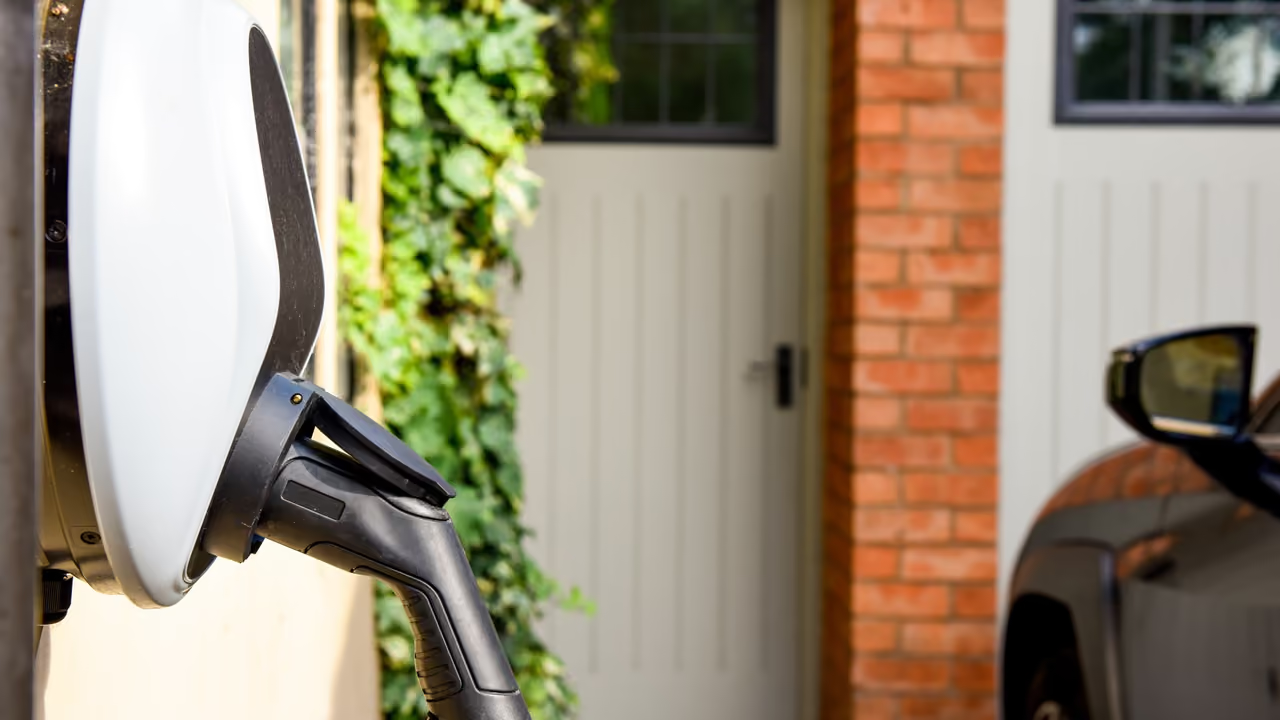
How does the way you charge your electric vehicle at home affect your electricity use and monthly bills? As more households adopt EVs, understanding the nuances between different charging setups becomes crucial. It’s not just about plugging in; the type of charger, when you charge, and how you manage the process can all influence your energy patterns and costs.
Comparing Level 1 and Level 2 Chargers Speed and Energy Draw
The most basic home EV charger is the Level 1 charger, which typically plugs into a standard 120-volt household outlet. It’s slow — adding about 3 to 5 miles of range per hour of charging. This means overnight charging can suffice for many daily commutes, but it also means the charger draws less power at any given moment.
On the other hand, Level 2 chargers require a 240-volt outlet, similar to what an electric dryer uses. They deliver a much faster charge rate, often 20 to 30 miles of range per hour. That speed comes with a higher energy draw, sometimes between 3.3 kW and 7.7 kW or more, which can create noticeable spikes in your household electricity usage.
Because Level 2 chargers draw more power in a shorter period, they can push your home’s electrical system harder. If your home isn’t wired to handle this load comfortably, it could trip breakers or require an electrical upgrade. But the quicker turnaround means less total charging time, which can be beneficial for balancing your energy use.
Smart Chargers and Their Role in Managing Peak Demand
Enter smart chargers—devices that connect to your Wi-Fi and give you control over when and how your EV charges. Unlike standard chargers, smart chargers can delay charging until off-peak hours, reduce charging speed during peak demand, or even integrate with home energy management systems.
Many utility companies offer time-of-use (TOU) rates, where electricity costs less during off-peak hours (like late at night). Smart chargers can automatically schedule charging sessions during these cheaper periods, helping you avoid the expensive peak rates between late afternoon and early evening.
More advanced smart chargers can also respond to signals from the grid to reduce or pause charging during times of high demand, contributing to grid stability and potentially earning you incentives or credits from your utility provider.
Impact of EV Charging on Household Energy Bills
Charging an EV significantly increases your home’s electricity consumption. The exact impact depends on your driving habits, charger type, and energy rates. For example, a typical EV battery ranges from 40 kWh to 80 kWh. Charging a depleted battery at home could add 10 to 20 kWh per day to your household electricity use.
If you use a Level 1 charger, this energy is drawn slowly over many hours, often overnight, which might align with lower rates. A Level 2 charger fills that same battery faster, but the higher power demand could trigger higher demand charges or push your usage into more expensive rate tiers, depending on your utility’s billing structure.
Without smart management, charging your EV during peak hours can inflate your electricity bill. In regions without TOU rates, the cost difference might be negligible, but in many U.S. states and other countries, it can be significant. Some households report their electricity bills doubling or more after adopting an EV, primarily due to charging habits.
Strategies to Optimize Home EV Charging for Efficiency and Savings
Optimizing your home EV charging setup is less about the charger alone and more about how and when you use it. Here are some practical strategies:
- Use a Smart Charger: Investing in a smart charger that can schedule and modulate charging is one of the best ways to cut costs. It helps you avoid peak demand charges and takes advantage of lower off-peak rates.
- Charge Overnight: Most utilities offer lower rates at night. Even a Level 1 charger can fully charge many EVs overnight, making this a simple way to save.
- Monitor Your Usage: Use your smart charger’s app or your utility’s online tools to track when and how much energy your EV consumes. Awareness can lead to better charging habits.
- Consider Solar Integration: If you have solar panels, syncing EV charging with peak solar production can minimize grid electricity use. This often requires a smart charging system that can respond to solar output.
- Upgrade Electrical Infrastructure if Needed: For households wanting the fastest Level 2 charging, ensuring your home’s electrical panel and wiring can handle the load safely is key. This avoids costly surprises and ensures reliability.
Ultimately, the way you set up and manage your home EV charging has a direct impact on your household’s electricity usage pattern and your monthly energy costs. Being intentional about charger choice, timing, and technology can make the difference between a manageable utility bill and an unexpectedly high one.