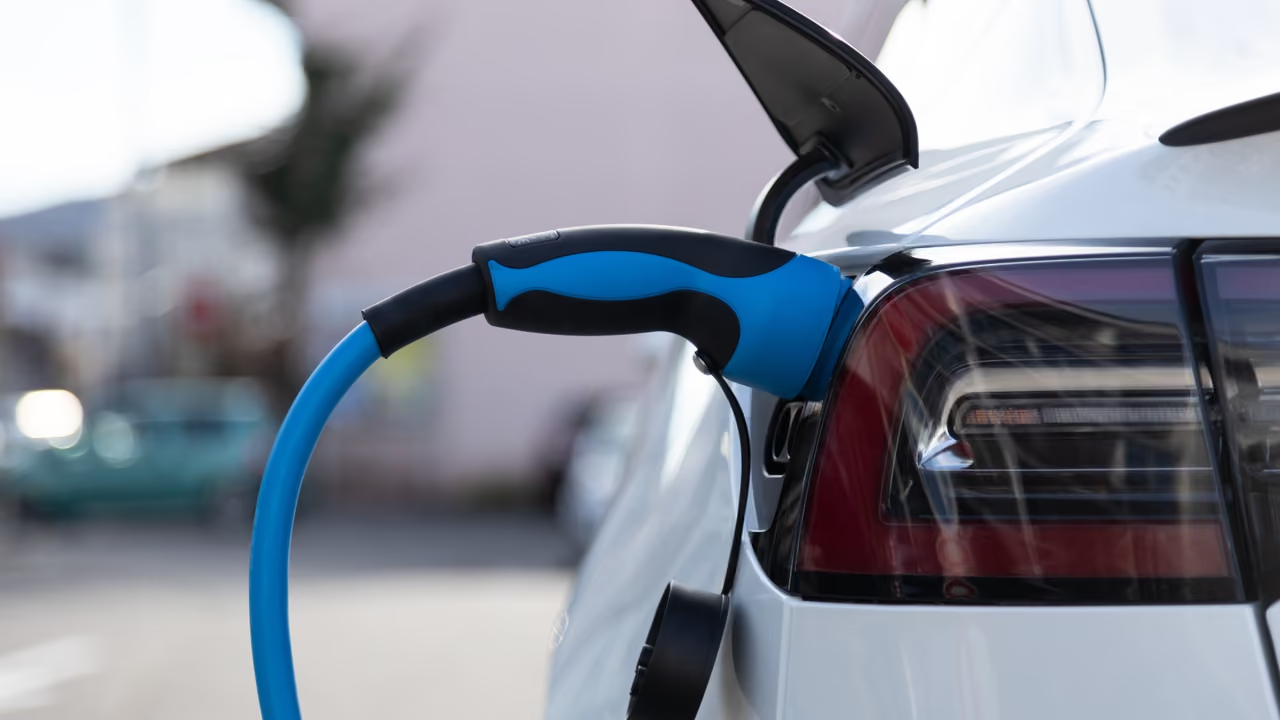
How green is your EV charger? As electric vehicles become the standard for eco-conscious driving, the question of how they’re charged grows more urgent. Not all EV charging methods are created equal when it comes to their environmental impact. Understanding the nuances can help drivers truly lower their carbon footprint rather than just shifting emissions from tailpipe to power plant.
How Different EV Charging Methods Affect Emissions
Charging an EV isn’t just about plugging in; it’s about how and when the electricity is delivered. The environmental impact varies significantly between slow home charging and rapid public chargers.
Level 1 Charging
Level 1 charging uses a standard household outlet (120 volts in the US). It’s the slowest method, delivering about 2 to 5 miles of range per hour. From an environmental standpoint, it often aligns with when your home electricity is cheapest and sometimes cleanest—like overnight off-peak hours. However, if your home electricity comes from coal or natural gas, emissions can still be high.
Level 2 Charging
Level 2 chargers operate at 240 volts, commonly found in homes with dedicated EV chargers or in public parking spots. They add 10 to 60 miles of range per hour. This method is more energy-efficient due to less time plugged in and can be paired with renewable energy sources more easily. Still, the carbon footprint depends on the grid’s energy mix.
DC Fast Charging
DC fast chargers deliver rapid charging, often adding 60 to 100+ miles of range in 20-30 minutes. They draw a high power load directly to the battery, which can increase stress on the battery and require substantial grid energy. Fast charging stations often rely on grid power that is less likely to be renewable, especially along highways and in urban areas. This makes DC fast charging the most carbon-intensive method per kWh delivered.
The Role of Renewable Energy in EV Charging
The biggest factor in the environmental impact of EV charging is the source of electricity. EVs charged on coal-heavy grids may produce more emissions than efficient gasoline cars. Conversely, charging with renewable energy can make EVs nearly emission-free.
Homeowners with solar panels have a clear advantage. They can charge during the day using sunshine, effectively powering their EV with clean energy. Some utilities also offer green energy programs or time-of-use rates encouraging charging when renewable generation is high.
Public charging infrastructure is catching up. Increasingly, DC fast charging stations are paired with onsite solar arrays or batteries charged by renewables. Some networks allow users to select renewable energy options for their charging sessions, though this is not yet widespread.
How Consumers Can Choose Greener Charging Options
EV owners can take simple steps to shrink their charging carbon footprint:
- Charge at home during off-peak hours: Many grids are greener at night with lower overall demand and more wind power.
- Install solar panels: Directly powering your EV with solar energy is the cleanest option.
- Use Level 2 chargers when possible: They are more efficient and easier to pair with renewables than fast chargers.
- Avoid unnecessary DC fast charging: For daily driving needs, slow charging suffices and reduces emissions.
- Choose green energy plans: Check if your utility offers renewable energy tariffs or credits for EV charging.
- Support charging networks powered by renewables: Seek out public stations that advertise clean energy use.
Emerging Trends in Sustainable EV Charging Infrastructure
Charging technology is evolving fast, with sustainability increasingly at the core. Here’s what’s coming:
- Vehicle-to-Grid (V2G) Technology: EVs can feed electricity back to the grid during peak demand, helping balance renewable fluctuations.
- Solar-Powered Charging Stations: Stations equipped with solar panels and battery storage reduce reliance on the grid and cut emissions.
- Smart Charging Systems: These optimize charging times based on grid carbon intensity, electricity prices, and user needs.
- Expansion of Renewable Energy Integration: Utilities and charging networks are increasingly investing in wind, solar, and hydro to power EV infrastructure.
- Wireless Charging: While convenience-focused, advances aim to improve efficiency and integrate with renewable energy sources.
Choosing the right charging method and energy source profoundly shapes the true environmental benefits of driving electric. As infrastructure and technology improve, EV owners can make smarter, greener choices that go beyond the vehicle itself.